We should say upfront that we sell guided walks, so take this with the appropriate pinch of salt. But we also live here, and the honest answer is more interesting than “yes, always”.
The short answer
For your first visit, a guide for a few hours is worth it. Not because you’ll get lost forever — you won’t — but because the medina doesn’t explain itself, and the things worth seeing are behind doors you won’t know to open.
After that, walk on your own. Genuinely. Half the pleasure of Fes is wandering with no plan, and you’ll do that much better once someone has given you a mental map.
Why Fes is different from other old towns
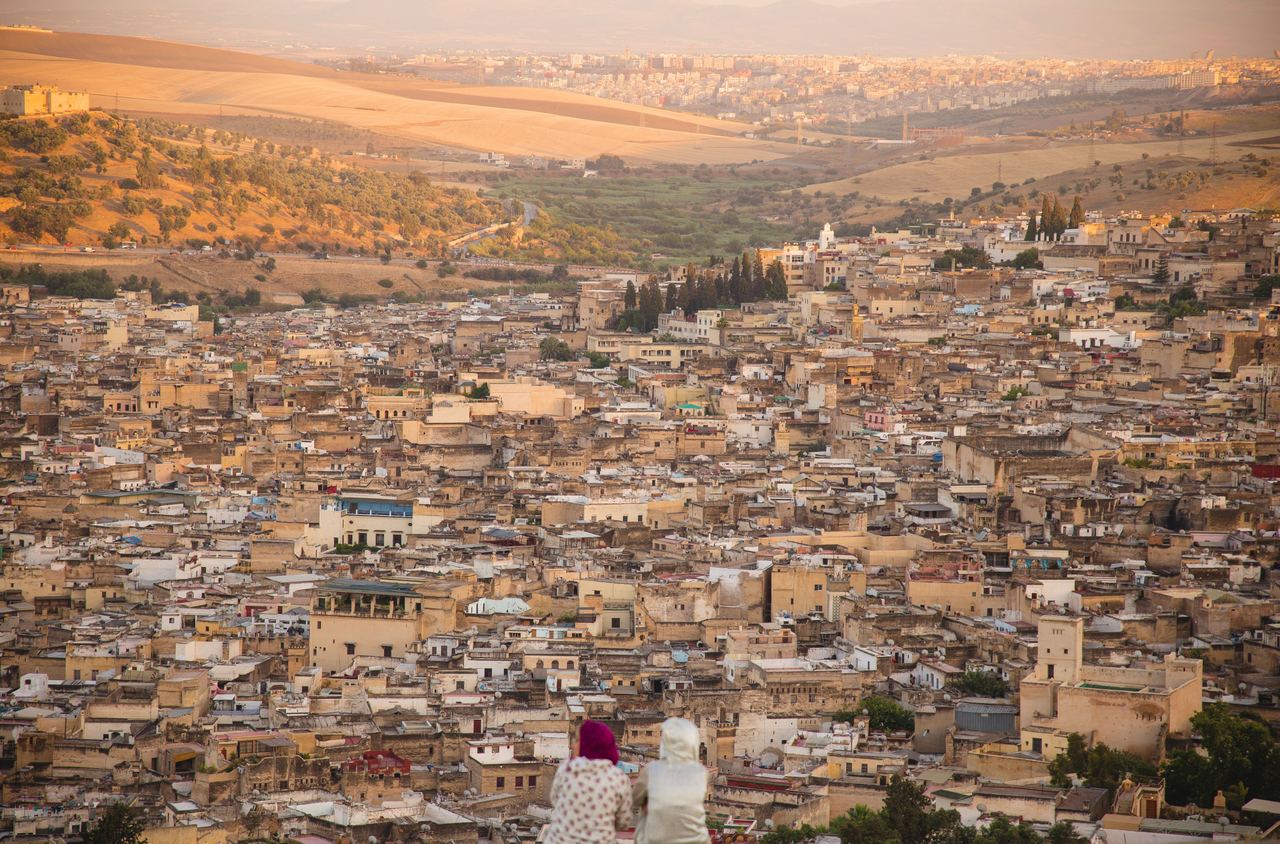
Most historic quarters are a grid with a few curves. Fes el-Bali is not. It’s a medieval city that was never redesigned for vehicles, and it still isn’t — it’s usually described as one of the largest car-free urban areas in the world. The alley count is commonly quoted at around nine thousand. Whatever the real number, the effect is the same: there is no main street, almost nothing is signposted, and your phone’s blue dot will drift through walls.
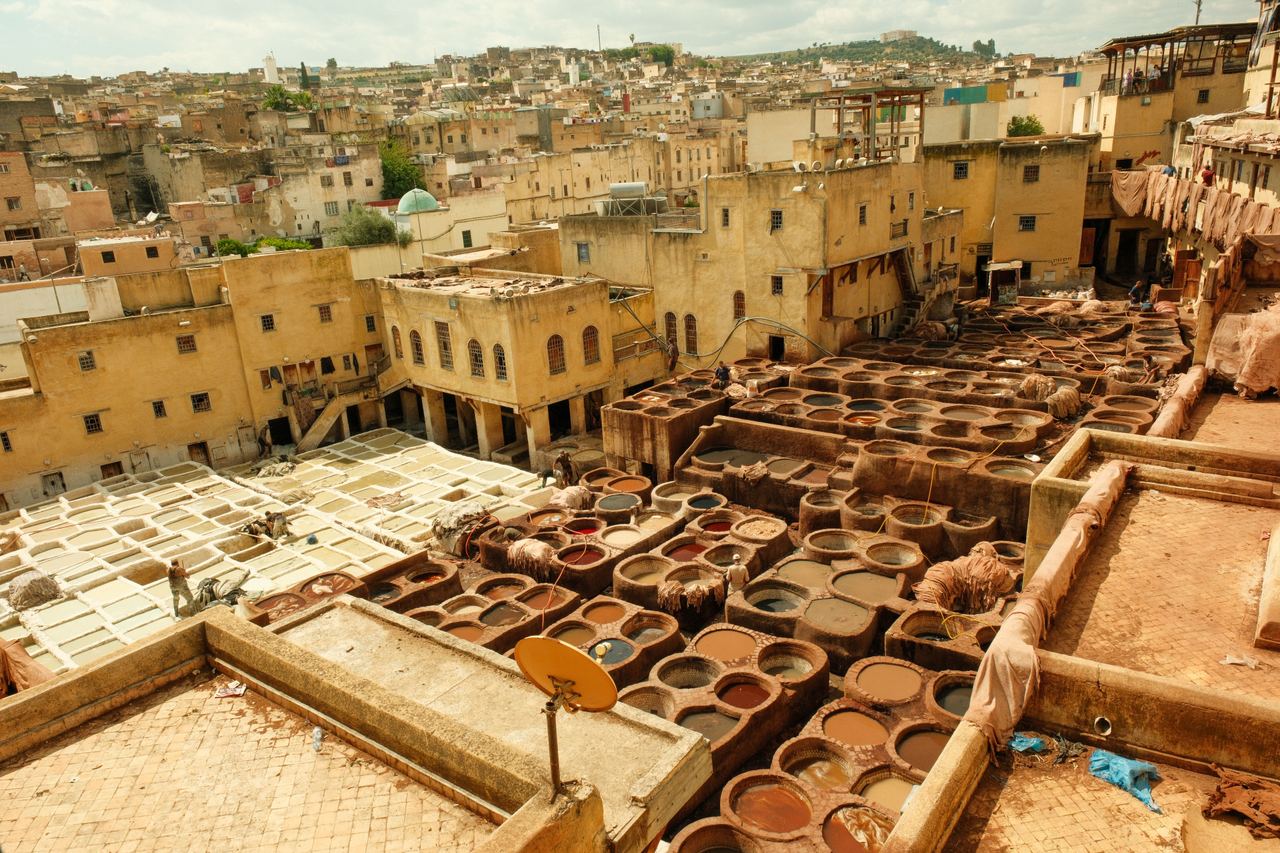
More to the point, the medina is a working city, not a preserved one. The tanneries are tanneries. The workshops are workshops with people in them on a deadline. From the alley, almost all of it looks like a plain wooden door.
When you genuinely don’t need one
Be honest with yourself about what you want:
- You have several days and like being lost. Fes rewards aimlessness more than almost anywhere. If you’ve got the time and the temperament, you’ll be fine.
- You only want the famous few. Bab Boujloud, the Nejjarine square, the view over Chouara from a leather shop terrace — you can reach these alone. Head downhill from Bab Boujloud and you’ll hit the main artery eventually.
- You’re on a tight budget and time-rich. Getting a little lost costs nothing but time.
- You’ve been before.
If that’s you, skip the guide. We mean it.
When a guide actually changes things
- You have one or two days. This is the big one. A guide is a time machine: three hours with one shows you what three days alone would, because they know what’s open now, which route avoids the worst of the crowds, and which workshops will let you in.
- You want to see people working. Brass, weaving, leather, woodwork. Workshops aren’t attractions with ticket desks — you get in because someone knows the family.
- Prayer times and market hours matter. Parts of the route change through the day and the week. A good route is planned around that, not against it.
- You’d rather not be steered into a shop. More on that below.
- You’re travelling with kids, or anyone who tires easily. The medina is steep in places and the cobbles are uneven. Knowing the flat way, and where to sit down, matters more than you’d think.
The thing nobody tells you: faux guides
This is the real reason to book someone in advance.
Unofficial guiding is illegal in Morocco, which doesn’t stop it. If you stand near Bab Boujloud looking at a map, someone will offer to help. Sometimes they’re genuinely kind. Often the walk ends in a carpet shop where your “guide” takes a commission on anything you buy, and the price of the rug has been adjusted accordingly.
How to tell a licensed guide: they carry a card issued by the Ministry of Tourism, with a photo, and they’ll show it without being asked. Ask. A licensed guide will not mind; anyone who bristles has told you what you need to know.
A legitimate guide also has no financial reason to walk you into a shop. If you want to buy something, they’ll take you somewhere good and leave you to haggle yourself.
What it should cost
Rates vary a lot with group size and length. A shared half-day walk should be inexpensive — ours is €12 per person for three hours. A private full-day guide costs considerably more, and should.
Two warnings in opposite directions. Something priced far below everyone else is usually free because the money comes from commissions. And a very expensive hotel-desk booking is often the same guide with a markup on top.
What we’d actually suggest
If you have two days in Fes, this works well:
- Morning one: a guided walk, three hours or so. Souks, a workshop or two, Al-Qarawiyyin, the tannery. Ask questions constantly — that’s the whole value.
- Afternoon one onward: on your own, deliberately lost. You’ll recognise more than you expect.
- Day two: go back to the two or three things you want to see properly, at your own pace.
The guide isn’t there to show you everything. They’re there to make the rest of your trip make sense.
A note on booking
Book before you arrive if you can — not because walks sell out, but because arriving with a plan is the single best defence against being adopted by someone at the gate.
Ask whoever you book with: are you licensed, what languages, how big is the group, and does the route include the tannery? Any guide worth paying answers all four in one message.