
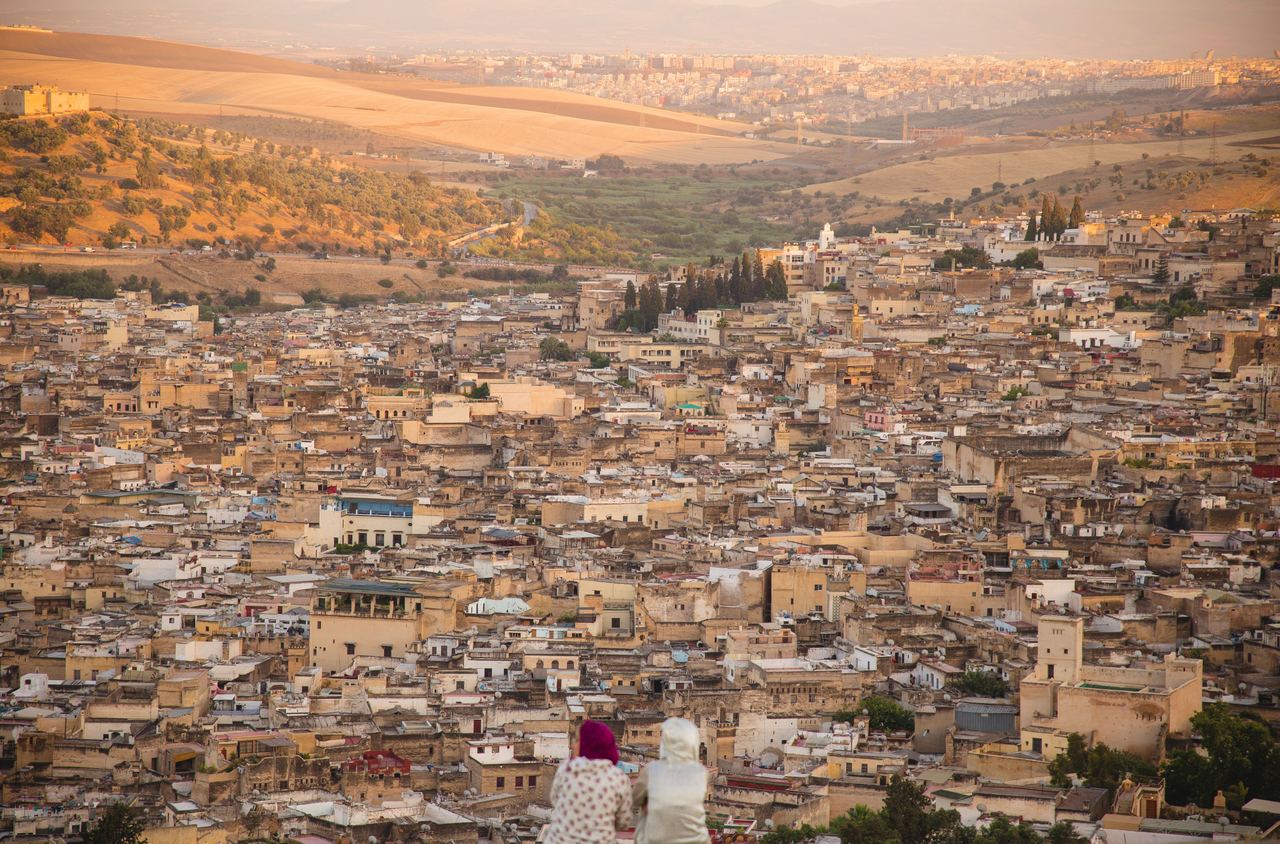
Fes gets squeezed. It’s usually slotted between Chefchaouen and the desert, and travellers give it a night because the itinerary said so. Here’s what each length actually gets you.
The short answer
- 1 day — enough for the medina’s headline sights, and you’ll leave knowing you missed it.
- 2 full days — the sweet spot. The medina properly, plus time to go back to what you liked.
- 3 days — only worth it if you’re adding a day trip, or if you genuinely love wandering.
- 4+ — for people who want to study something: cooking, a craft, Arabic.
“Full day” means a full day. Arriving at 6pm and leaving at 9am the next morning is not one day in Fes.
What one day looks like
It can be done, but be ruthless and start early.
Morning. Enter at Bab Boujloud and head downhill. Souks, the Nejjarine square, the Al-Qarawiyyin quarter, and a terrace over the Chouara tannery. Three hours at a reasonable pace, more if you stop.
Afternoon. Pick one thing and do it properly — the Bou Inania madrasa, or a long lunch on a rooftop, or an hour buying one thing well.
Late afternoon. Drive or taxi up to the Marinid Tombs for the view over the whole medina at the end of the day. It’s the photograph you came for, and it takes twenty minutes.
What you’ll miss: the mellah and the Royal Palace gates, the Andalusian quarter, the potteries outside the walls, and any feeling of having been somewhere rather than through it.
Why two days is the real answer
The second day is where Fes stops being a maze and becomes a city.
Day one is orientation. Whether or not you take a guide, your first hours are spent decoding: which alleys are arteries, what the donkey warnings sound like, where you are relative to the river. You see a lot and absorb less than you think.
Day two you already know how it works. You recognise a corner. You go back to the workshop from yesterday and actually talk to the man rather than photographing him. You find lunch without a map. This is the day people remember.
It’s also the day with room for the things that don’t fit a highlights route:
- Bou Inania madrasa — one of the few religious buildings in Fes open to non-Muslims, and worth the entry.
- Nejjarine Museum of Wooden Arts — small, calm, and the rooftop café has one of the best views in the medina.
- The Mellah and Bab Semmarine — the old Jewish quarter, with balconies facing the street, which is architecturally the opposite of everything in the medina.
- Borj Nord or the Marinid Tombs — go at sunset.
- Sitting still. Underrated. Pick a café on a busy corner and watch for an hour.
When a third day earns its place
Add a day if you want to leave the city, not to add more medina.
- Meknes and Volubilis. The classic Fes day trip. Volubilis is the best-preserved Roman site in Morocco, with mosaics still in the open air, and Meknes is an easy, uncrowded imperial city on the way. A full day with a driver.
- Ifrane and the cedar forest. An hour and a half up into the Middle Atlas, a different climate entirely, and macaques in the cedars near Azrou. Good if you’ve had enough of alleys.
- Sefrou. Small, close, almost no tourists.
What a third day does not need to be is another full day in the medina. By then you’ll want air.
Fitting Fes into a bigger trip
Three patterns that work:
Fes as the slow stop. Marrakech is louder and more commercial; Fes is older and less performed. If you’re doing both, give Fes the extra night, not Marrakech.
Fes before the desert. Most Merzouga routes leave from Fes, usually three days and two nights. Arrive in Fes, take two full days, then leave on the desert run. This is the most common sensible shape.
Fes and the north. Chefchaouen is around four hours by road, Tangier a little more. Fes works as the anchor at the southern end.
Practical notes on timing
Best months. March to May and September to November. July and August are genuinely hot and the medina holds the heat. Winter is mild in the day and colder than people expect at night, and some rooftop terraces close.
Fridays. Many workshops shut around midday prayer and reopen in the afternoon. It’s a quieter, nicer day to walk, but a worse one for seeing people work.
Ramadan. The medina changes completely. Days are slow, evenings are extraordinary. Worth planning around in either direction — check the dates for your year, they shift.
Arrival day doesn’t count. The train from Casablanca or Marrakech eats most of a day. Plan to arrive, eat, sleep, and start properly the next morning.
So: two days
If you’re reading this to settle an argument with your travel companion — two full days, three nights. One night before, two days in the city, out on the morning of the fourth.
That’s enough to come away with a sense of the place rather than a camera roll of doorways.