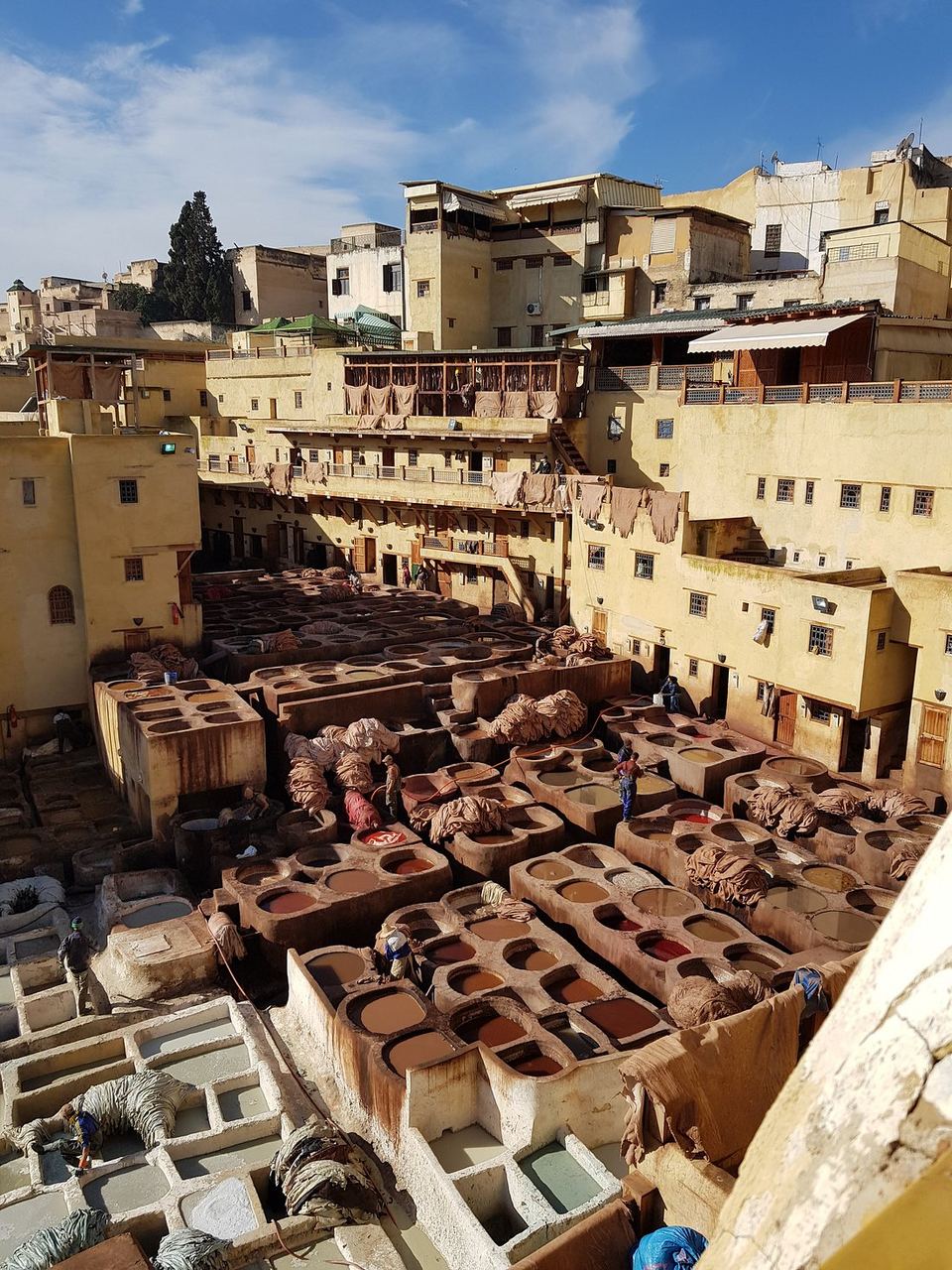
The Chouara tannery is the picture that sells Fes: stone vats of ochre, red and white laid out like a paint box, men standing waist-deep in them. It’s also the part of the visit travellers most often get wrong — not because it disappoints, but because nobody tells them how it works before they arrive.
What it is
Chouara is the largest of the three tanneries still working in Fes el-Bali, and the processes in use are essentially medieval. There is no visitor centre, no ticket office, and no official viewing platform. It is a workplace, and you are looking down into it from somebody’s roof.
The leather coming out of it is sold a few metres away — in the shops whose terraces you stand on. That arrangement explains most of what follows.
How you actually see it
You go up through a leather shop. There’s no other way. The shops ringing the tannery have terraces on their upper floors, and they let visitors up.
Someone will hand you a sprig of mint at the door. Hold it under your nose. This is a genuine courtesy and also the opening move of a sales conversation.
You’ll be shown the view, then the shop. Expect to walk back down through three floors of jackets, bags and babouches, with someone explaining the quality of each. This is the deal: the view in exchange for a few minutes of your attention.
There is no fixed entry price. Some shops ask nothing. Some expect a tip — 20 to 30 dirhams is normal and generous. If someone demands a large sum before you’ve seen anything, go to the next shop; there are several, and they all have roughly the same view.
About the smell
It is usually oversold. On a cool morning it’s noticeable but unremarkable. On a hot afternoon in August, standing directly above the white vats, it’s strong — ammonia and something organic underneath.
The white pits are the reason. Hides are soaked in a mix that traditionally includes lime and pigeon droppings; the enzymes strip hair and soften the skin so it can take dye. The coloured pits further on are gentler on the nose — those are vegetable dyes: poppy for red, saffron and turmeric for yellow, indigo for blue, henna, mint and cedar for the greens and browns.
The mint helps more than you’d expect. Most people stop noticing after five minutes.
When to go
Early morning, 9 to 11. This is the answer. The light falls into the vats rather than across them, the men are working, and it’s cooler. By mid-afternoon the pits are in shadow and much of the work has moved indoors.
Avoid Friday around midday. Work largely stops for prayers.
Spring and autumn are both better than summer for the obvious reason, and the dye colours look best under clear, soft light.
A detail worth knowing: the vats are drained and refilled on their own cycle. Some days a section is empty grey stone. Nothing you can plan around — it’s a working tannery, not a set.
Buying leather, if you want to
You don’t have to buy anything. Say no pleasantly and you’ll be let out with no hard feelings; it happens all day.
If you do want to:
- Haggle. The opening price is an opening price. Somewhere between half and two-thirds of it is normal, reached without rancour. Take your time; it’s a conversation, not a fight.
- Smell the leather. Properly tanned leather smells of leather. A sharp chemical edge means it isn’t what’s being claimed.
- Check the stitching and the lining, and work the zip a few times. The leather is usually the honest part; the making is where quality varies.
- Camel is not usually camel. Most “camel leather” is goat or sheep. Goat is excellent — soft, hard-wearing, and what most of the good babouches are made from. The label matters less than the feel.
- Prices are higher on the terraces than in shops a few streets away. You’re paying something for the view, which is fair enough.
Photographs
Photographing the vats from the terrace is expected and fine. Photographing the men working, close up, is a different thing — they’re at work, not on display. Ask, or don’t take it. Some will wave you off, some won’t mind.
A wide lens exaggerates the pits; a slightly longer one gives you the colour blocks that make the picture work. And stand back from the parapet for the first shot — the drop is real and there’s no railing worth the name on some terraces.
Getting there
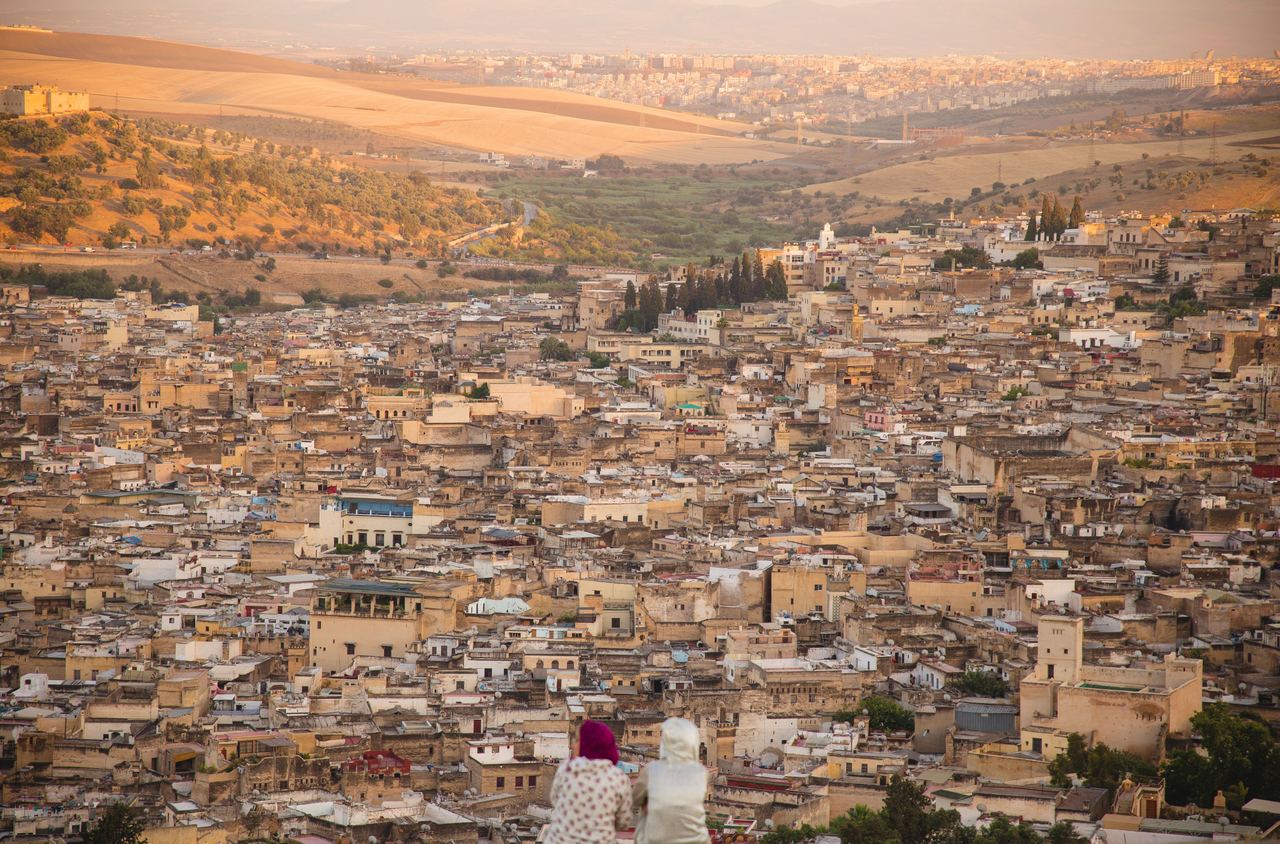
Chouara sits in the north-east of the medina, near Place Seffarine and the Al-Qarawiyyin quarter. It’s downhill from Bab Boujloud and then east, through streets that narrow considerably.
Walking in without directions is the one part of Fes where people genuinely struggle — the approach is a knot of small alleys, and this is where unofficial guides tend to attach themselves to lost-looking visitors. Either learn the route from Place Seffarine, which is findable, or arrive with someone who knows it.
What to wear
Closed shoes. The ground near the tannery is wet in places and the dye gets everywhere. Nothing pale that you care about. The terraces are open to the sun, so a hat in summer.
It takes twenty minutes to see, and it’s the one part of the medina that looks exactly like the photographs. Go in the morning, take the mint, and don’t feel obliged to buy a jacket.